Helping SaaS Users Reach First Value

- Separate activation events from experienced value
- Make the path to a useful result visible
- Do not let the product tour replace the task
- Measure time alongside the share who succeed
- Frequently asked questions
- Can every SaaS product use the same activation event
- Should we remove the product tour entirely
- Where should we begin
- Sources
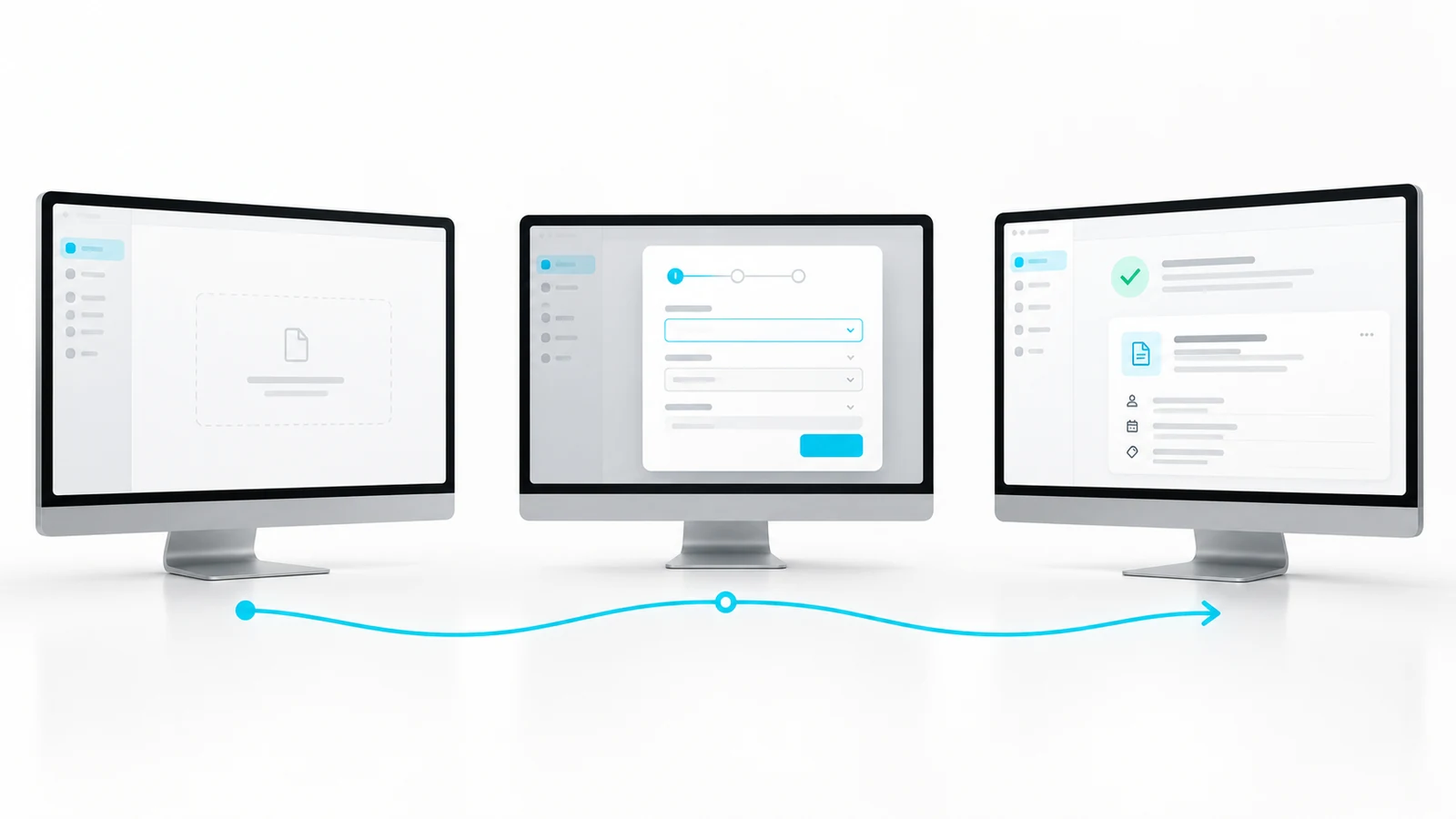
Completing registration does not mean a SaaS user has received value. Someone can create an account and finish a product tour without accomplishing the task that brought them to the product. Design onboarding around the first meaningful outcome, then make the route to that outcome understandable.
First value depends on the product's promise. A reporting tool might deliver it when someone creates a useful report. A collaboration product might deliver it when a real task is completed with a colleague. Choose the definition because it reflects customer benefit, rather than because the event is easy to track.
Separate activation events from experienced value
Amplitude's discussion of time to value distinguishes completing an in product action from experiencing value.[1] Make that distinction explicit in your own product. Connecting an integration may be a preparation step; producing a useful result from the connected data may be the outcome that matters.
In a hypothetical reporting tool, the measurement could start at first login and end when someone shares a report built from their own data. Whether that is appropriate depends on the product's purpose. Validate the definition with users before treating a sample report as equivalent to a real outcome.
Make the path to a useful result visible
| Stage | The user's question | Design support |
|---|---|---|
| Empty starting point | Where do I begin | An action tied to the first task |
| Setup | Why is this necessary | The reason and prerequisites |
| Waiting for data | Is the system working | Accurate status and next action |
| First output | Is this useful to me | A clear result and an editing path |
| Continuing | What should I do next | A relevant next task |
Do not hide setup requirements merely to reduce the apparent number of steps. If permissions, data sources or approval from a colleague are needed, explain them. Separate actions the current user can complete from dependencies owned by someone else.
Do not let the product tour replace the task
A tour that explains every feature can delay the first useful action. Offer help when the user reaches the relevant decision. Instead of an empty state that only says “no records yet,” explain how to create the first record. Clearly label templates and sample data so they cannot be mistaken for real activity.
Avoid presenting every checklist item as equally important. Profile enrichment and marketing preferences may not help someone complete their first task. Keep optional steps separate, make skipping them possible and provide a clear route back later.
Measure time alongside the share who succeed
Track the proportion of users who reach the defined outcome within a specified window as well as time to first value. Measuring only successful users can hide those who never progress. Consider median and upper quartile completion times alongside user role, segment and whether data was ready at the start.
Document start and end events, and separate internal test accounts. Combining performance data with user research can help explain what sits behind the numbers.[2] A shorter time is not a useful improvement if people are encouraged to produce incomplete or inaccurate results.
Frequently asked questions
Can every SaaS product use the same activation event
No. The product's promise, user role and frequency of use differ. Define the event within that context and check that it represents a useful outcome.
Should we remove the product tour entirely
Not necessarily. Examine whether it helps people complete their task. Short, contextual guidance may be more useful in some journeys.
Where should we begin
Choose a new user's first meaningful task and trace the journey from setup to outcome. Explore VOYA product design services to discuss that experience.
Sources


Explore All Blogs


















Ready to talk
about your project?
Do you have a clear vision regarding the ideas, goals, requirements, and desired outcomes for your project? Let's take the first step together by setting up a meeting to bring all of these to life.