AI Costs in Digital Products: Designing User Experience and Profitability Together


- How does AI change the cost structure of a digital product?
- Why should AI growth and gross margin be measured together?
- Same revenue, different costs: A simple product scenario
- How does user experience affect AI costs?
- 1. Clarify the scope before processing begins
- 2. Support targeted edits instead of full regeneration
- 3. Make progress visible
- 4. Make existing results easy to reuse
- Different tasks need different levels of AI capability
- AI pricing is part of the user experience
- Measure more than query volume
- What should you validate before launching an AI feature?
- VOYA’s approach: Designing value, experience and cost together
- Sources
Imagine adding an AI reporting feature to a SaaS product. Users generate reports in seconds, explore different analyses and use the feature more frequently each week.
At first glance, it looks like a successful product launch.
But subscription revenue stays the same while every report, regeneration and background AI task adds to the cost of serving those customers. Usage rises, yet gross profit per customer can fall.
AI transformation in digital products becomes sustainable when the value delivered to users and the cost of delivering it are designed together. AI costs therefore belong in conversations about product strategy, user experience and pricing.
How does AI change the cost structure of a digital product?
Traditional software also incurs infrastructure, data processing and support costs as usage grows. Generative AI features can introduce additional variable costs for individual interactions.
When someone clicks “Generate report,” that single action may trigger several operations:
- Finding and preparing relevant data.
- Sending information to a model.
- Generating analysis and text.
- Checking the output.
- Retrying failed steps.
- Storing and presenting the result.
What looks like one action in the interface may involve multiple model calls and external tools.
Running a model to produce an output is known as inference. However, the total cost of an AI feature extends beyond inference charges. Data infrastructure, search services, monitoring, quality assurance and human intervention also need to be considered.
This changes the question product teams need to ask:
What is the total cost of helping a user complete their task successfully?
Why should AI growth and gross margin be measured together?
ICONIQ’s 2026 State of AI: The Builder’s Economy, based on input from more than 300 software executives, reports AI product gross margins of 45% in 2025, with respondents projecting 53% for 2026 and 59% for 2027. These figures reflect the surveyed companies and their expectations. They are not fixed benchmarks that every AI product should be assumed to match.
For product teams, the implication is straightforward: revenue growth needs to be assessed alongside changes in the cost of generating that revenue.
Heavy usage may indicate that users find a feature valuable. However, higher usage alone does not establish economic success. It can also mean that:
- Users repeatedly retry because the results do not meet their needs.
- Simple tasks generate unnecessarily extensive analyses.
- Unchanged data is processed again and again.
- Subscription prices do not account for the cost of intensive use.
Understanding these possibilities requires usage data to be read alongside task success and cost data.
Same revenue, different costs: A simple product scenario
The following example illustrates what can happen when an AI feature is added to an existing subscription. The USD amounts are hypothetical. They are not real customer data, industry averages or a currency conversion of the Turkish example.
| Per customer, per month | Existing product | Product with an AI feature |
|---|---|---|
| Subscription revenue | $100 | $100 |
| Existing direct service costs | $20 | $20 |
| Additional AI service costs | $0 | $27 |
| Total direct service costs | $20 | $47 |
| Gross profit | $80 | $53 |
| Gross margin | 80% | 53% |
Revenue remains unchanged, while monthly gross profit falls by $27 per customer. This calculation excludes sales, marketing, product development and general administrative expenses. The 53% margin is an illustrative assumption; this example does not reproduce the cost structure of the companies in ICONIQ’s research.
This does not mean the AI feature is a poor investment. It may encourage upgrades, reduce churn or help acquire new customers.
Those benefits need to be measured, however. Expected commercial value cannot be assumed independently of usage costs.
How does user experience affect AI costs?
UX design influences which actions users initiate, what information they provide and how many attempts they need to reach a useful result. Those decisions also shape the operating cost of an AI feature.
1. Clarify the scope before processing begins
A broad command such as “Analyze this” leaves expectations unclear. The system may produce an unnecessarily long response, prompting another attempt when the user cannot find what they need.
In a reporting product, a few choices can make the experience more predictable:
- The date range to analyze.
- The data sources to include.
- The main question to answer.
- A short summary or a detailed analysis.
This does not require a lengthy form for every task. Useful defaults and preset options may be enough for common workflows. The goal is to make the user's intent clear with minimal effort.
2. Support targeted edits instead of full regeneration
If a user wants to change only the conclusion of a report, offering “Regenerate” as the sole option may cause the entire report to run again.
More specific actions can help:
- Shorten this section.
- Rewrite the selected paragraph.
- Update only the data that changed.
- Simplify the explanation.
This preserves the parts users already like. If the underlying system supports section-level processing, it can also reduce unnecessary regeneration.
Design and engineering need to make this decision together. A button labeled “Update this section” will not deliver the expected cost benefit if the system still regenerates the entire document.

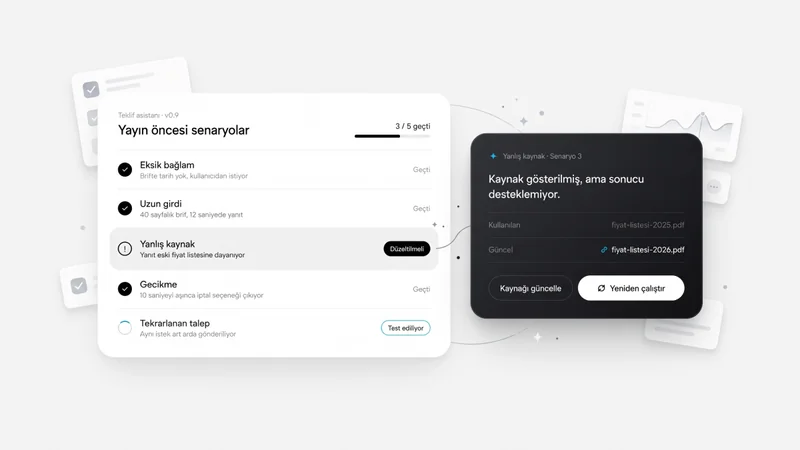
3. Make progress visible
When no response appears, users may click again, refresh the page or restart the same task.
A useful AI experience makes it clear whether work is still running. For longer tasks, it shows completed steps, offers cancellation where appropriate and prevents accidental duplicate submissions.
Cancellation also needs to work beyond the interface. Dismissing a loading indicator does not necessarily stop the underlying operation.
4. Make existing results easy to reuse
Someone opening yesterday’s report does not always need a new one.
The product can show the existing output and explain which data it uses. When the data changes, it can offer an update.
For example:
This report uses data from October 1–31. It has not been updated since the latest data import.
This helps users decide whether another run is necessary. Caching and reusing outputs must also respect data freshness, access permissions and privacy requirements.
Different tasks need different levels of AI capability
Classifying a short message, reviewing a long document and comparing several sources require different capabilities.
Anthropic’s Building Effective Agents recommends starting with the simplest workable solution and adding complexity when it is needed. It also highlights the trade-off between task performance, cost and latency in agentic systems.
For product design, this means clearly defining what each task actually requires.
| User need | Product approach |
|---|---|
| Label a record | A narrowly scoped classification task |
| Quickly understand a long text | A brief summary |
| Answer a specific question | A response grounded in relevant sources |
| Compare multiple sources | A more extensive analysis workflow |
Users do not need technical model names to understand these choices. Options such as “Quick summary” and “Detailed review” can communicate meaningful differences in output and waiting time.
Each option should be tested against real tasks. Lower processing costs may not translate into lower overall costs if users repeatedly need to try again.
AI pricing is part of the user experience
Plans, quotas and usage allowances influence how users perceive an AI feature.
When users cannot tell how much allowance an action will consume, they may hesitate to try it. Unexpectedly reaching a limit can undermine trust.
The pricing experience needs to answer practical questions:
- Which AI actions are included in my plan?
- How much usage do I have left?
- How much allowance will this task consume?
- Will a failed task count against my allowance?
- What happens when I reach my limit?
A fixed subscription, usage-based pricing or a combination may be appropriate. The model should reflect customer value and the distribution of usage costs.
For example, basic summaries could be included in a subscription, while extensive analyses of large datasets use a separate allowance. If credits are used, their meaning needs to be explained in terms of actions people understand.
Users should not need to calculate tokens to understand the price.
Measure more than query volume
The number of times an AI feature is used is a useful starting point. It does not explain what users gain or what it costs to deliver that value.
A more useful evaluation combines several metrics:
| Metric | Question it answers |
|---|---|
| Task completion rate | Can users reach the result they need? |
| Total cost per task | What does reaching that result cost? |
| Regeneration rate | How often is the initial output insufficient? |
| Time to completion | Does the feature save users time? |
| Output acceptance or use rate | Does the result enter the user's workflow? |
| Gross profit by customer and feature | Is usage economically sustainable? |
| Paid upgrades and churn | How does the feature affect commercial behavior? |
Cost per successfully completed task is particularly useful when comparing different experiences.
A workflow that costs more on its first attempt may be more efficient overall if it reliably completes the task. A cheaper operation can lose its advantage when it requires repeated attempts.
What should you validate before launching an AI feature?
When planning AI integration in a digital product, teams can include economic assumptions in prototype and pilot testing.
An initial pilot should explore:
- What task do users need this feature to complete?
- What benefit does it provide compared with their current approach?
- How many attempts are needed to produce an acceptable result?
- How do typical and intensive usage differ in cost?
- How do users continue when an operation fails?
- Can users understand the allowance and pricing?
- What evidence will establish whether the commercial benefit covers the feature's cost?
This will not eliminate every uncertainty before launch. It does make the assumptions being tested—and the conditions for changing the product—more explicit.
VOYA’s approach: Designing value, experience and cost together
At VOYA, we approach AI transformation in digital products through user needs, product strategy and experience design.
Deciding which tasks AI should support, how much control users delegate, how they evaluate outputs and how they recover from failures are core product decisions.
Their cost implications should also be considered during design. An experience that reduces unnecessary regeneration, clarifies scope and helps users complete tasks with fewer attempts can contribute to a sustainable AI product.
A well-designed AI feature helps users complete their work reliably and enables the business to deliver that value at a sustainable cost.
Explore VOYA’s AI transformation services to assess which AI opportunities make sense for your digital product.
Sources


Explore All Blogs







































Ready to talk
about your project?
Do you have a clear vision regarding the ideas, goals, requirements, and desired outcomes for your project? Let's take the first step together by setting up a meeting to bring all of these to life.