Today
Where should the user click?
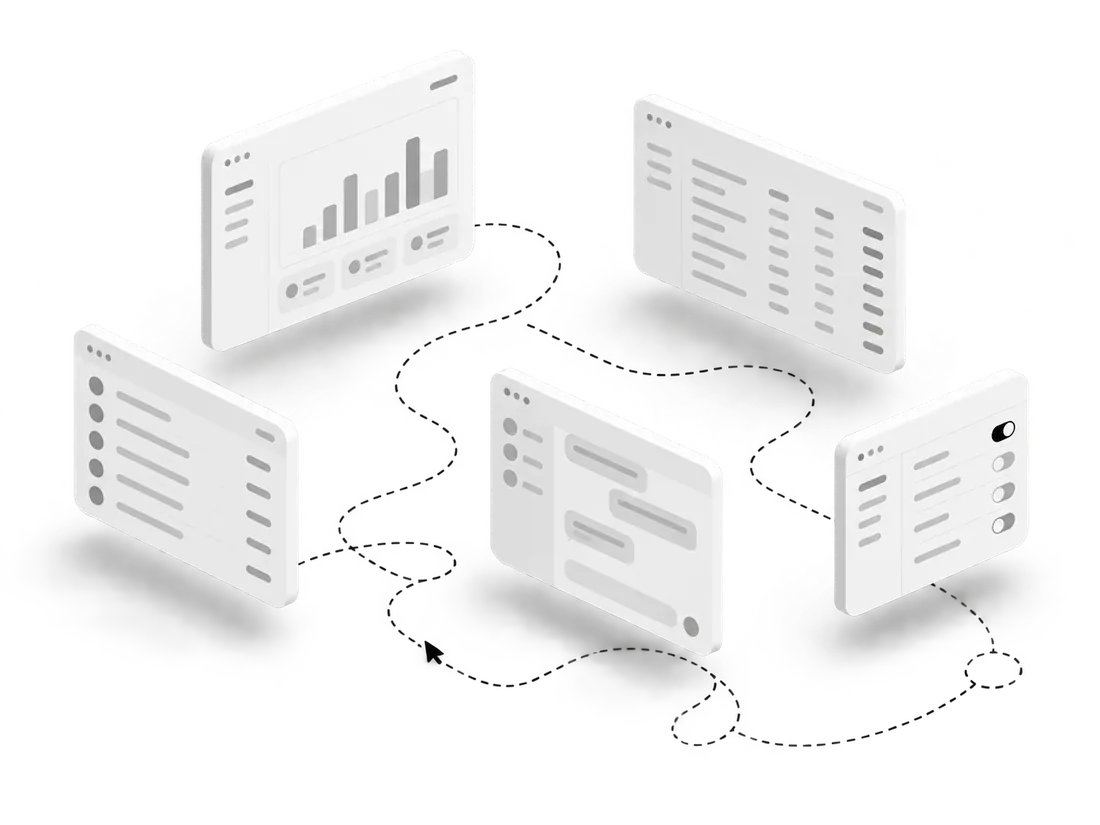
Users find their own way to a result through reports, filters and tables.
We transform existing digital products into experiences where AI is more than a feature: it changes how the product works.
The VOYA chip is in the centre, with Claude on the left and ChatGPT on the right. Tap a chip to animate the light flowing through the circuits. This is a visual interaction.





AI should be more than another feature. Design for what users want to achieve, not where they should click.
Users find their own way to a result through reports, filters and tables.
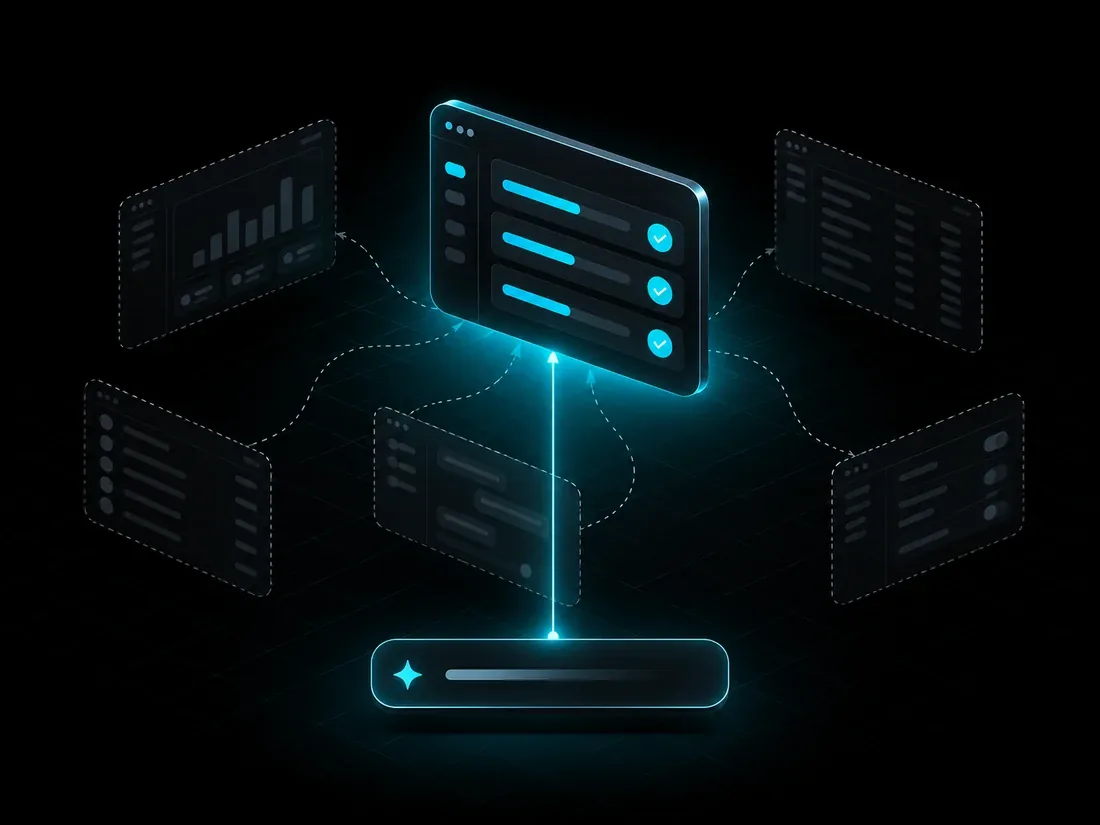
The user states the outcome; the product prepares the work, and a human approves it.
Not every product needs to be AI-native. What matters is knowing where you stand and choosing your next step deliberately.
The existing product stays largely the same. AI acts as an assistant that speeds up specific tasks.
Users manage everything; AI helps. The existing product stays largely the same, while AI speeds up specific tasks.
AI actively participates in workflows. It keeps things on track, anticipates risks and prepares the next step.
Users make decisions alongside AI. AI actively participates in workflows.
The product itself starts to behave differently. Intent becomes the primary interface.
Users review and approve where needed. The product itself behaves differently; intent becomes the primary interface.
What level is your product?
We start by understanding the product and its users, not by choosing a model. We bring transformation into the product through validated steps.
Understand the product, its users and business goals.
Identify where AI can create real value.
Rethink existing workflows with AI.
Turn concepts into testable experiences.
Measure value, trust and control with real users.
Bring the validated experience into the product and design system.
Not every product needs to be AI-native. What matters is knowing where you stand and choosing your next step deliberately.
If you’re unsure
Find where AI can create real value in your product in 5–7 days.
If your direction is clear
We turn selected workflows into intent-based experiences and bring them into your product with your team.
At the intersection
While rescuing a workflow, we may discover that AI calls for rethinking it entirely.
“We worked with VOYA throughout the design of the AI-powered Clovy app, from the initial idea to the finished product. VOYA’s guidance helped shape the product on a solid foundation.”


Let’s explore what AI can really change in your product, which tasks it can eliminate, and how the experience should be reimagined.
A chatbot is an interaction interface added to a product. AI product transformation rethinks how users complete a task. The aim is to reduce steps, make decisions easier, and help users reach outcomes with less effort. The solution may be an assistant or an AI experience embedded within an existing screen.
Not always. We first assess your existing product, user needs, and technical constraints. We start with a workflow where AI can create meaningful value and validate the solution through a prototype. These findings help us determine whether a broader transformation is needed.
It is particularly relevant to products where users search for information, interpret data, perform repetitive tasks, or make decisions across multiple steps. Fintech, SaaS, and enterprise software are examples. Suitability depends more on the problem to be solved and the available data than on the industry.
During the 5–7 day engagement, we identify and prioritize areas where AI can create value in your product. You receive an AI opportunity map, prioritized use cases, and a recommendation for the next step. We agree on the scope of prototyping and user validation together at the outset.
We lead the product design process, from understanding product and user needs and identifying AI opportunities to redesigning user flows, prototyping, and validation. We turn the validated experience into development-ready designs. At the start of the project, we clarify responsibilities for software development, model selection, and integration with your technical team.
At the start of the design process, we consider which data will be used, which actions AI can perform, and where user approval is required. We design review, correction, and undo steps for sensitive actions. We assess security and regulatory requirements together with technical teams and relevant specialists.
We treat incorrect and uncertain results as part of the design process. We design flows that let users review and correct the output and, when needed, complete the task themselves. For critical actions, we create appropriate control and approval points rather than allowing AI to make decisions on its own.
We evaluate success by the contribution to user needs and business goals, rather than simply whether AI has been added to the product. At the outset, we define measures such as task completion time, success rate, and the need for corrections. We assess these measures in prototype tests and define the indicators to monitor after launch.