How to Choose a UX Agency? What You Need to Know to Make the Right Decision


- How to Choose a UX Agency? What You Need to Know to Make the Right Decision
- Why Choosing the Right UX Agency Matters
- Common Mistakes When Choosing a UX Agency (Especially in Turkey)
- How to Identify a Good UX Agency
- UX Agency vs Freelancer: Which One Should You Choose?
- Key Criteria for Choosing a UX Agency
- Problem-Oriented Approach
- Process Transparency
- Research Capabilities
- Industry Experience
- Communication & Collaboration
- How a UX Agency Impacts Your Product
- Is There Really "The Best" UX Agency?
- Conclusion: A UX Agency Is Not a Vendor — It's a Partner
How to Choose a UX Agency? What You Need to Know to Make the Right Decision
Choosing the right UX agency is one of the most critical decisions in any digital product development process. Because user experience is no longer just a "design" concern; it is a strategic factor that directly impacts product success, user adoption, and business outcomes.
Today, many companies try to identify the root cause of their product issues in technical infrastructure, marketing strategies, or team performance. However, often, the real problem lies much deeper — in the user experience itself. Users may struggle to comprehend your product, navigate through its processes, build trust, or complete tasks. At this point, working with the right UX agency doesn't just mean improving design; it means redefining the entire product experience.
This brings up a crucial question: How do you choose the right UX agency?
In this article, we'll break down the key criteria for selecting a UX agency, common mistakes companies make, and how the right partner can fundamentally impact your product.
Why Choosing the Right UX Agency Matters
Selecting a UX agency is not just about choosing a vendor. It's about forming a strategic partnership that will influence the future of your product.
A strong UX agency doesn't just do the following:
- Design screens
- Create user interfaces
- Deliver something that "looks good"
A great UX agency understands your product challenges, analyzes user behavior, and aligns business goals with user needs.
On the other hand, a poor choice often leads to the following:
- Endless revision cycles
- Users struggling to understand the product
- Low conversion rates
- Increased support requests
- Misalignment between teams and the agency
That's why choosing a UX agency should be based on impact, not cost.
Common Mistakes When Choosing a UX Agency (Especially in Turkey)
Many companies searching for a UX agency tend to make similar mistakes — often driven by incorrect assumptions early in the process.
The most common mistake is treating UX as purely visual design. Many companies look for a "modern look" or "better UI." However, UX goes far beyond aesthetics. It's about how users understand, navigate, and interact with your product.
Another mistake is relying solely on references. While past clients and big brand names are important, they don't guarantee that an agency can solve your specific problem. What matters more is how the agency approaches challenges similar to yours.
A third common mistake is making decisions based purely on price. A cheaper agency might seem attractive in the short term, but poor user experience creates long-term costs — including lost users, lower conversions, and weakened brand perception.
How to Identify a Good UX Agency
There are several key signals that indicate whether a UX agency is truly the right fit — and they go far beyond portfolio visuals or presentations.
A good UX agency talks about problems, not just design. Instead of asking what kind of interface you want, they focus on understanding what problem you're trying to solve. This is one of the strongest indicators of a true UX mindset.
They also define their process clearly. From user research to information architecture, interaction design, and interface design — every stage should be transparent and structured. Agencies with vague processes often focus on visuals rather than outcomes.
Another critical factor is the use of data and insights. UX decisions should not be based on personal preferences. A strong agency supports its decisions with user testing, analytics, and research findings.
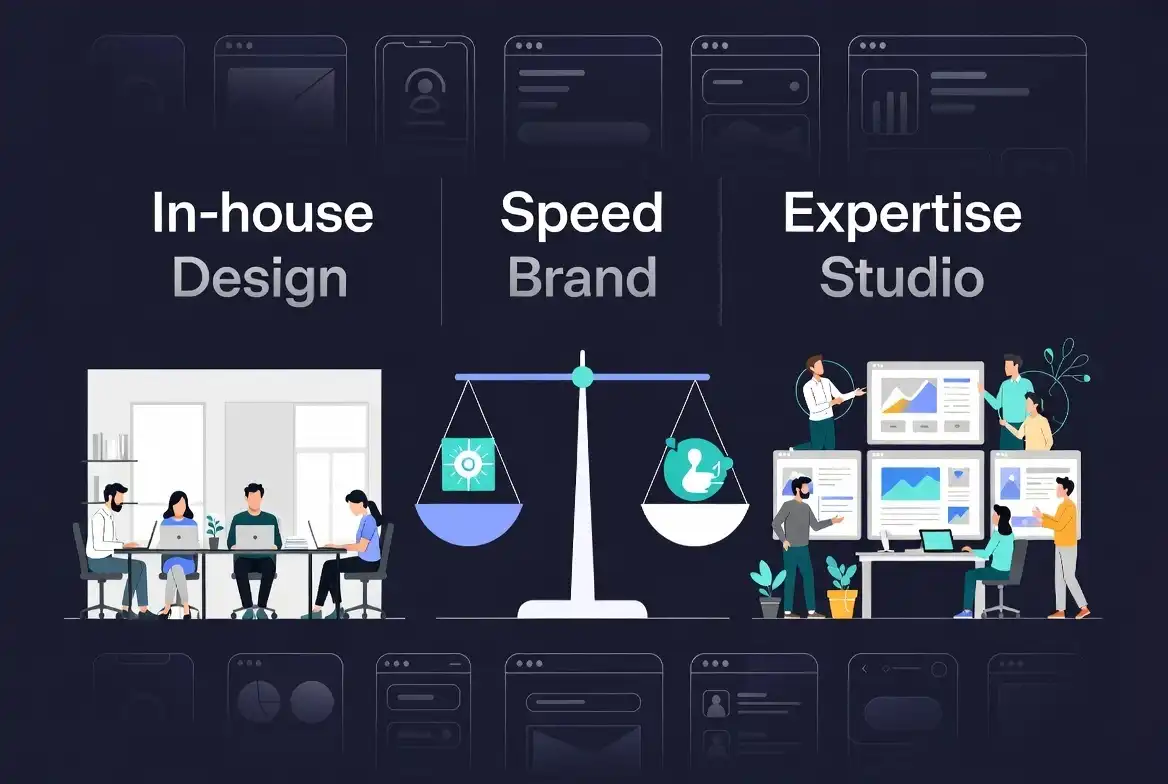
UX Agency vs Freelancer: Which One Should You Choose?
This is a common dilemma for many companies looking for UX support.
Working with a freelancer may seem faster and more cost-effective, especially for smaller projects. However, as product complexity increases, the limitations of this model become clear.
UX is not a one-person job. It requires a combination of research, strategy, interaction design, and interface design. Freelance setups often lack these disciplines or handle them superficially.
A UX agency, on the other hand, approaches the process as a team effort. Different specialists contribute to more profound analysis and more robust solutions. Agencies also provide better structure in terms of process management and quality control.
So the decision shouldn't be based only on cost but on the level of depth your product truly requires.
Key Criteria for Choosing a UX Agency
To make the right decision, you need to evaluate agencies based on a structured set of criteria. These criteria help you assess the agency's true alignment with your needs.
Problem-Oriented Approach
The agency should focus on understanding the problem before proposing solutions. If they jump straight into design suggestions, it's usually a sign of a surface-level approach.
Process Transparency
A good UX agency clearly explains each phase of the process — what will be done, what will be delivered, and how things will progress.
Research Capabilities
User research is the foundation of UX. The agency's ability to conduct meaningful research directly impacts the quality of the outcome.
Industry Experience
Different industries come with different dynamics. Experience in complex domains like fintech or SaaS can be a major advantage.
Communication & Collaboration
UX is an ongoing, collaborative process. The agency's communication style should align with your team's way of working.
How a UX Agency Impacts Your Product
Working with the right UX agency creates visible and measurable improvements — not just in design quality, but across the entire product experience.
Users understand your product faster, make fewer errors, and complete tasks more easily. This directly increases conversion rates. At the same time, user satisfaction improves, and support requests decrease.
More importantly, your product becomes more scalable. A well-structured user experience makes it easier to introduce new features and grow your product sustainably.
Is There Really "The Best" UX Agency?
Many companies search for "the best UX agency," but there is no universal answer.
The best UX agency is the one that understands your problem the best and can solve it effectively. That's why the decision should be based less on popularity or awards, and more on alignment and approach.
The right agency is the one that creates real value for your product.
Conclusion: A UX Agency Is Not a Vendor — It's a Partner
Choosing a UX agency is not about buying a service; it's about building a partnership. This means you should consider not only your current needs but also the future of your product.
The right agency doesn't just make your product look better — it makes it more understandable, usable, and successful.
A poor choice, on the other hand, traps you in an endless cycle of fixes and revisions.
So take your time, ask the right questions, and choose a partner that truly understands your product.


Explore All Blogs














Ready to talk
about your project?
Do you have a clear vision regarding the ideas, goals, requirements, and desired outcomes for your project? Let's take the first step together by setting up a meeting to bring all of these to life.