Going Deep in UX: VOYA's Approach as a UX Studio


- Going Deep in UX: VOYA's Approach as a UX Studio
- Why UX Stays on the Surface
- How a UX Studio Thinks
- You Can't Design a Solution Without Designing the Problem
- UX Is About Behavior, Not Just Feedback
- UX Is a System, Not a Screen
- The Difference Between Surface-Level UX and Deep UX
- VOYA's UX Studio Approach
- Conclusion
Going Deep in UX: VOYA's Approach as a UX Studio
Today, almost every product team claims they are doing UX. Flows are mapped, interfaces are redesigned, and the product starts to look more polished. On the surface, everything seems right. Yet the product still doesn't grow. Users drop off at critical points, support requests increase, and teams try to fix things by adding more features.
The problem is rarely technical. It's not even about visual quality.
The real issue is this: UX exists, but it doesn't go deep.
Most teams approach UX at the interface level. They focus on what users see,
not what they experience. However, UX is not just the visible layer. It's the
combination of user behavior, business goals, and system logic working
together as a whole. As Nielsen Norman Group defines it, user experience is
the sum of all interactions a user has with a product.
Ref: The Definition of User Experience (UX)
This perspective is precisely why VOYA positions itself not as a UX agency but as a UX studio. Because what we do is not just design interfaces, we rethink how products work.
Why UX Stays on the Surface
When UX doesn't go deep, the root cause is rarely design capability. It's usually how UX is positioned within the organization.
In many companies, UX is still treated as a design function. It comes into play after product decisions are already made and is expected to "improve" what already exists. At that point, UX becomes a layer of refinement rather than a driver of decisions.
And here's the reality: A bad decision cannot be fixed with good design.
This is why many products fall into the same cycle. Problems are not solved; they are simply redesigned.
At VOYA, we approach UX differently. We don't treat it as a final step. We treat it as the foundation of the product itself.

How a UX Studio Thinks
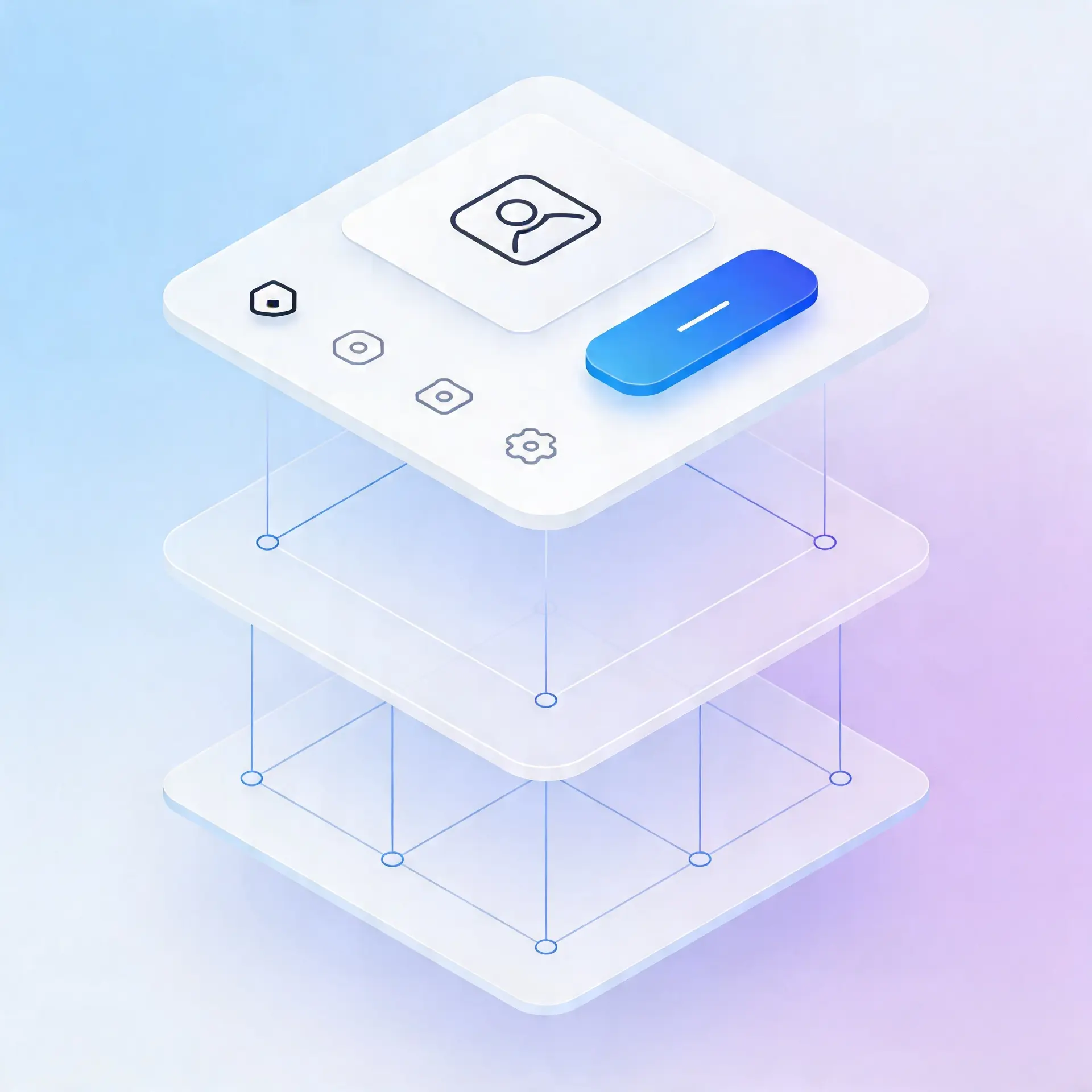
A UX studio does not focus only on outputs. It designs the thinking behind the product. This requires approaching UX across three interconnected layers: problem, behavior, and system.
These layers are not separate. They work together. If one is missing, UX remains shallow, no matter how polished the interface looks.
You Can't Design a Solution Without Designing the Problem
At VOYA, we don't start with screens. We don't begin by asking how to improve an existing flow.
We start with a more fundamental question:
Are we solving the right problem?
This question often shifts the entire direction of a project. Most teams optimize the solution rather than validate the problem.
In our work with Dominos, users were dropping off during the ordering process. At first glance, it looked like a UI issue. But when we analyzed the flow more deeply, we realized the problem wasn't visual; it was cognitive load.
Users were facing too many decisions at once.
Instead of redesigning the interface, we simplified the experience. We reduced unnecessary choices, clarified decision points, and guided users through the process more effectively.
Full case study: Dominos Case Study
This is where UX actually begins: not at the solution, but at the problem.
UX Is About Behavior, Not Just Feedback
One of the most critical aspects of UX is understanding behavior. Yet many teams rely too heavily on what users say instead of what they do.
Users cannot always articulate what they need. But their behavior always reveals it.
At VOYA, we focus on:
- Where users hesitate
- Where they drop off
- Where decision-making slows down
In the Rezervem project, users were abandoning the booking flow before reaching the payment step. Initial assumptions pointed to pricing issues. But behavioral analysis revealed something else entirely.
Users were experiencing uncertainty.
They didn't fully understand what would happen next, which created a lack of trust. This uncertainty prevented them from completing the process.
Our solution wasn't visual. It was structural. We made the process more predictable, increased transparency, and gave users a stronger sense of control.
Full case study: Rezervem Case Study
This is where UX intersects with psychology. Because user experience is not just about interaction, it's about perception.
UX Is a System, Not a Screen
UX is often associated with interfaces. But in reality, user experience is the output of an entire system.
When a user interacts with a product, they are not just interacting with a screen. They are interacting with:
- Data consistency
- System performance
- Business logic
- Operational processes
All of these shape the experience.
The Dijital Bayim project did not encounter user issues due to UI problems. The real issue was inconsistency in data flows, which created a lack of trust.
Instead of redesigning the interface, we restructured the system. We aligned data flows and built a more reliable and consistent experience.
Full case study: Dijital Bayim Case Study
This is why a UX studio doesn't just design screens. It designs systems.
The Difference Between Surface-Level UX and Deep UX
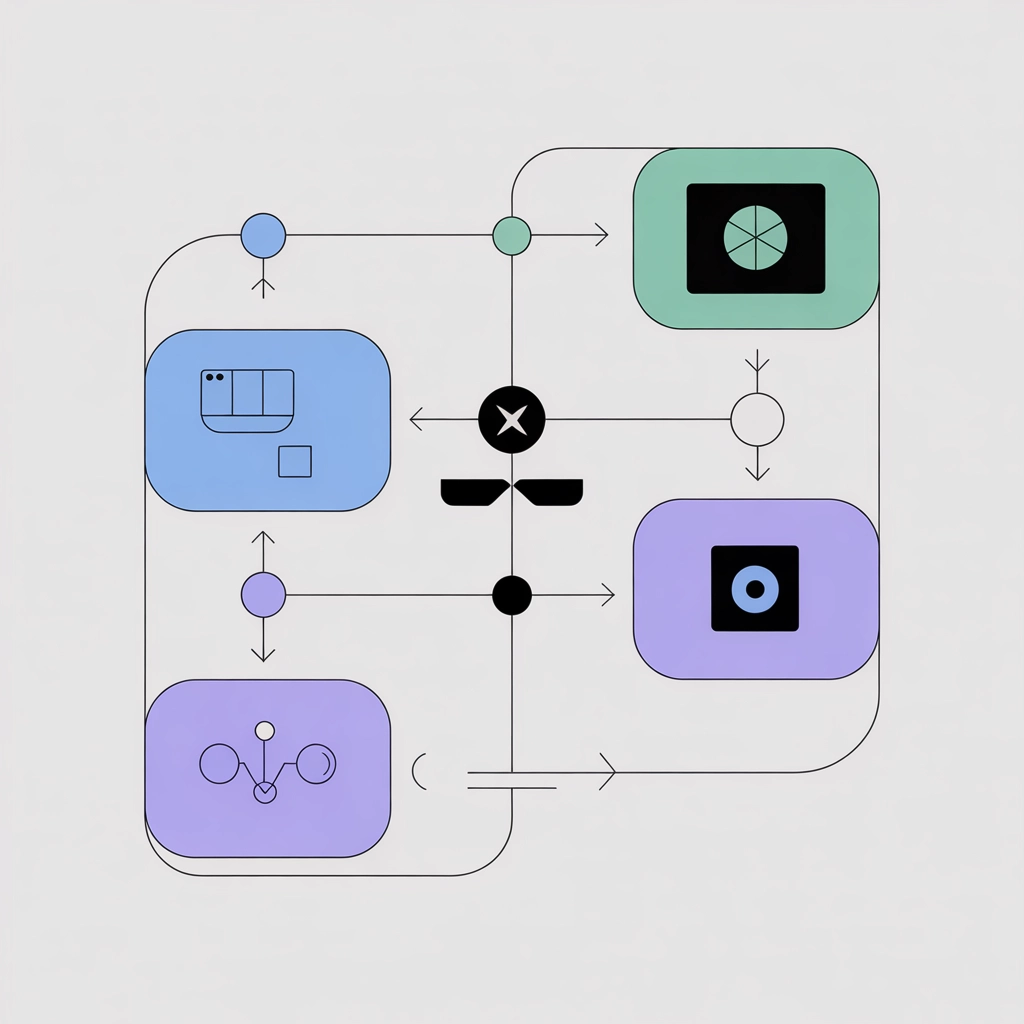
Surface-level UX often creates the illusion of progress. The interface appears more polished, the product feels more modern, and the team perceives progress. But the underlying issues remain.
Deep UX works differently. It focuses on root causes rather than symptoms.
Surface UX hides problems. Deep UX removes them.
This difference directly impacts business outcomes. Less complexity leads to faster decisions, higher conversion rates, and fewer support requests.
VOYA's UX Studio Approach
At VOYA, UX is not a deliverable. It is a continuous process. Research, design, and validation are not separate phases, they constantly inform each other.
We don't aim to create visually impressive interfaces. We aim to build systems that enable better decisions.
This means:
- Asking the right questions from the start
- Challenging assumptions
- Validating ideas through real user behavior
This approach shifts UX from being about aesthetics to being about performance.
Because great UX:
- Reduces cognitive load
- Guides users naturally
- Speeds up decision-making
- Drives product growth
Conclusion
UX often appears simpler than it actually is. Many teams try to improve UX by changing what's visible: colors, layouts, and components. But real change doesn't happen at the surface.
It happens at the decision level.
At VOYA, we approach UX as a system that defines how a product works, not just how it looks. We don't jump into design without understanding the problem. We don't rely on assumptions without validating behavior. And we don't limit UX to interfaces without considering the system behind them.
That's why we define ourselves as a UX studio, not a UX agency.
Because our goal is not to design better screens. It's to build better products.


Explore All Blogs















Ready to talk
about your project?
Do you have a clear vision regarding the ideas, goals, requirements, and desired outcomes for your project? Let's take the first step together by setting up a meeting to bring all of these to life.